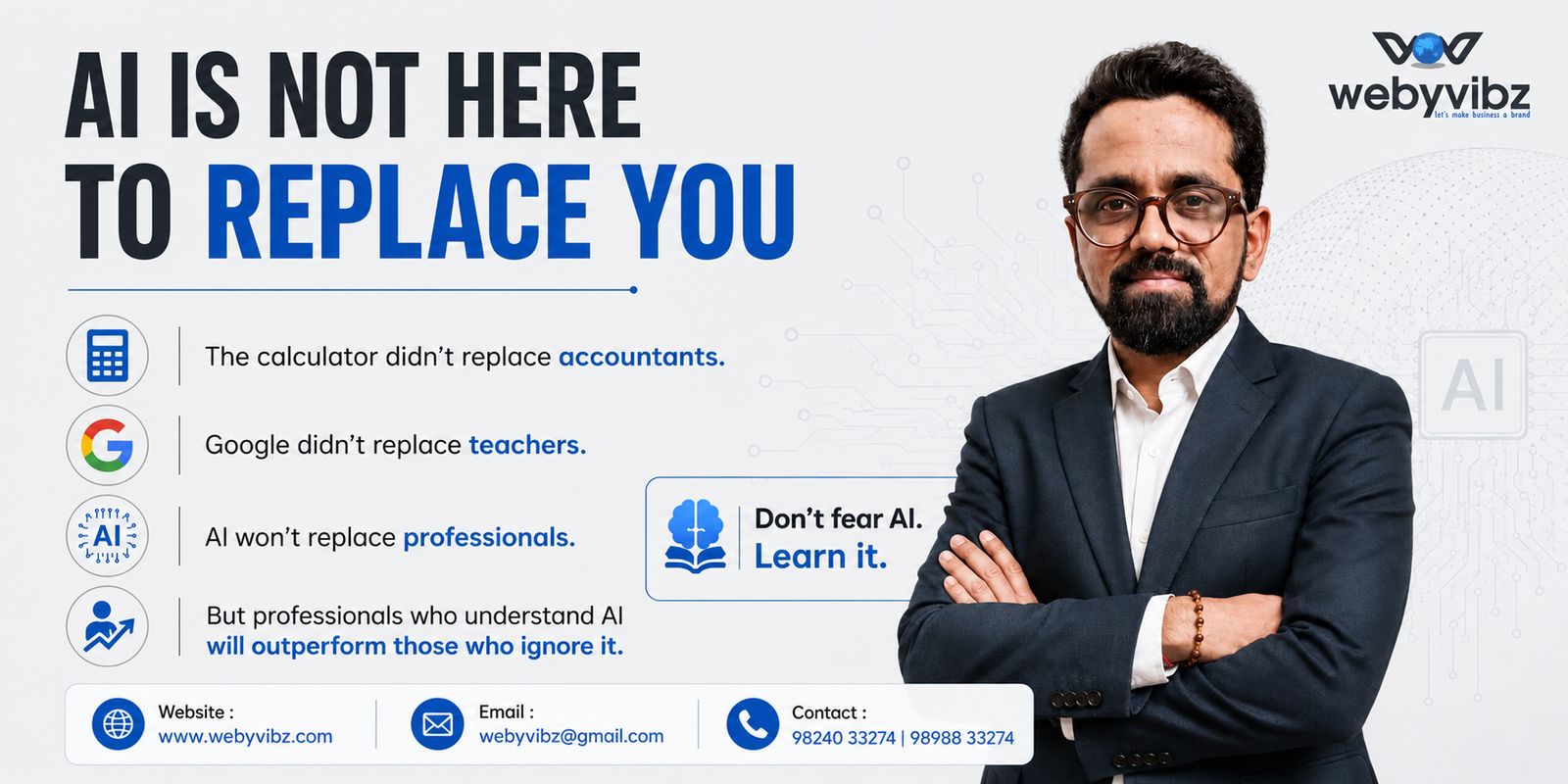
People keep asking the same worried question about AI: is this the thing that finally makes human expertise obsolete? History says no, but not for the reason most explainers give. Accountants didn’t lose their jobs to calculators. They got faster at the parts of the job that were never really about arithmetic in the first place. Teachers didn’t get replaced by Google. They stopped wasting class time on facts students could look up and spent more of it on the stuff that actually needed a person in the room. AI is following the same pattern, just with a wider range of tasks.
Tools Change the Job, Not the Person Doing It
Look at any tool that professionals were once afraid of, and you’ll find the same story. The calculator didn’t replace accountants, Google didn’t replace teachers, email didn’t replace salespeople, CRM software didn’t replace the people managing client relationships. What changed was how much time got freed up for the parts of the job that actually needed judgment. AI fits into that lineage. It’s a bigger jump than email was, but it’s still a tool, not a substitute for the person using it.
Where AI Is Genuinely Good, and Where It Isn’t
AI is fast at things that involve pattern-matching and volume: sorting through data, drafting a first version of something, handling repetitive tasks, pulling together research. Where it falls short is anything that depends on actually knowing a client, reading a room, or making a call with real consequences attached. Strategic decisions, relationships built over years, creative direction, leadership under pressure — none of that comes from a model predicting the next likely word.
The Advantage Isn’t AI. It’s Knowing How to Use It.
The professionals who’ll do well over the next few years aren’t the ones who avoided AI, and they’re not the ones who handed everything over to it either. They’re the ones who figured out where it actually saves them time and where it doesn’t. This isn’t really a Human vs AI story. It’s closer to a carpenter with a better saw: still needs to know what he’s building, still needs the eye for it, but he’s not cutting boards by hand anymore.
Where to Actually Start
If you’re wondering where to plug AI into your own work, the honest answer is: wherever you’re currently repeating yourself. Content drafts, SEO and GEO research, AEO groundwork, customer support responses, routine research, workflow tasks that eat an afternoon for no good reason. None of this requires learning to code or becoming an AI specialist. It requires trying the tools on real work and noticing what actually saves you time.
Where This Leaves Us
The professionals who get left behind won’t be the ones who used AI. They’ll be the ones who never bothered to find out what it was actually good for. Learning it doesn’t take long. Not learning it is the expensive mistake.
Frequently Asked Questions
Will AI replace professionals?
No. It takes over specific tasks, not the expertise behind them.
Why should businesses bother learning AI?
Because the ones who do will simply move faster than the ones who don’t, and that gap compounds.
Can AI replace creativity?
Not really. It can remix and suggest, but the judgment calls and the original ideas still come from a person.
How should a beginner start?
Just open ChatGPT, Gemini, or Claude and try using it on something you already do every week. You’ll learn faster from that than from any guide.
Author: Meet Shah – Founder, Webyvibz